Warehouse visibility
Turn cameras into inventory intelligence, exception alerts, and replenishment signals.
- Cycle count variance detection
- Dock and staging visibility
- Inventory exception queues tied to operations teams
Spatial AI only matters when visual detection changes how the business responds. We build perception systems that connect edge inference, cloud telemetry, and human review into one usable workflow.
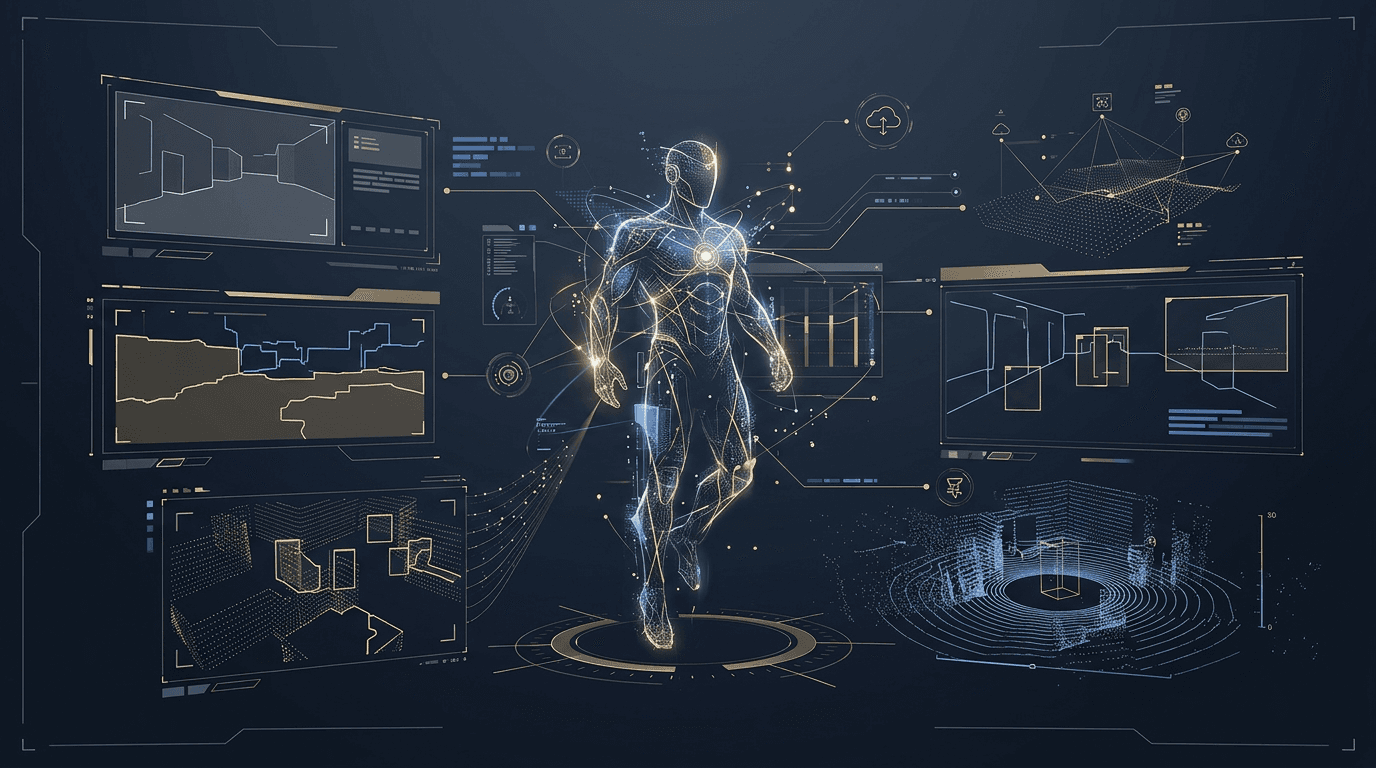
Detection overlays, telemetry flow, and operator escalation built as one system contract.
Trusted by leaders across finance, healthcare, infrastructure, and AI operations
We treat camera intelligence as a complete system design surface. The workflow, review posture, escalation path, and reporting layer are part of the same design surface.
Edge vision, detection overlays, and telemetry pipelines shown as one operational perception system.
Most spatial AI projects stall because the visual model is treated as the whole solution. The hard part is proving when the output is reliable, defining how people intervene, and making the resulting signal useful to the rest of the business.
Video streams, camera zones, and environmental constraints are mapped before model selection.
Models are tuned against the real cost of being wrong, not just benchmark precision.
Alerts, review queues, and approvals are routed into the teams that can actually respond.
The resulting signal is pushed into cloud reporting so operations and leadership see the same truth.
We focus on environments where visual signal can change cost, throughput, compliance, or planning discipline within a defined workflow.
Turn cameras into inventory intelligence, exception alerts, and replenishment signals.
Pair inline visual inspection with governed escalation and root-cause reporting.
Monitor PPE, restricted zones, and operating behavior without creating alert fatigue.
This is the same bias we bring to agentic systems and Azure modernization work: get the data path, governance, and execution layer right so the intelligence survives contact with the real business.
We define what the system must detect, what action should follow, and where a human review step is required.
Camera coverage, retention, frame sampling, latency budgets, and Azure/cloud integration are specified before any model claims are made.
We optimize thresholds against costly misses, false positives, and real operator behavior instead of model-benchmark vanity.
The value comes from the workflow: queues, alerts, dashboards, approvals, and reporting that shift how teams actually operate.
Translate shelf, bin, and staging visibility into replenishment and exception workflows.
Measure defect patterns, review queues, and throughput impact in the same operating view.
Use contextual detection and review logic so safety systems improve behavior instead of flooding teams.
The public experience works better when computer vision, agentic automation, and cloud engineering look like parts of one delivery capability instead of separate experiments.
How orchestration and operational intelligence patterns create dependable agent workflows instead of isolated prompts.
Our labs page shows how prototypes are evaluated against throughput, governance, and integration constraints.
The same delivery discipline applies to cloud telemetry, infrastructure operations, and executive reporting.
We help teams scope the workflow, prove the signal, and connect spatial intelligence into reporting and action without slipping into demo-only AI.